The Phantom Russian Cossacks

The fruits of my research into First World War rumours and belief legends was published in the Sunday Telegraph on 23 February under the headline:

A RUSSIAN REVELATION: WHERE THE MYTHICAL COSSACKS OF WW1 WERE REALLY FROM

by Jasper Copping

It seems to have been the worst kept national secret.

In the opening weeks of the First World War, word spread swiftly that up to a   million Cossack warriors had been shipped to Britain and were being spirited   through the country to be rushed into action on the Western Front, where   fighting was still at a critical phase and yet to be bogged down in the   trenches.

The news even reached the ears of the Germans, apparently provoking them into   strategic changes which are credited with allowing the Allies to stop them   achieving a swift victory.

Except there was not an ounce of truth in the reports, and the massive force   of Cossacks was non-existent.

The so-called “Russian rumour” is one of a number of myths and legends which   emerged during the First World War and which have now been investigated by   David Clarke, an academic from Sheffield Hallam University who specialises   in analysing such phenomena.

The research, which also covers the so-called Angel of Mons – an apparition   credited with assisting British soldiers – as well spying missions by   “phantom” Zeppelins, and “corpse factories”, where the Germans supposedly   processed human remains – has been conducted as part of a series of lectures   to mark the war’s centenary.

Dr Clarke has pieced together the “Russian rumour” from reports at the time,   tracing its origins and showing how it was used by British spies to dupe the   Germans.

The rumours began to circulate in the last week of August 1914 and swiftly started to appear in the newspapers, first local, then national   and even international.

Witnesses claimed they had seen southbound trains passing through the country   with blinds down, but with the occasional glimpse caught of carriages of   “fierce-looking bearded fellows in fur hats”. Others claimed the men still   had “snow on their boots”, while train drivers said they had spoken to the   foreign troops.

One article referred to reports that an “an immense force of Russian soldiers   – little short of a million it is said – have passed, or are still passing,   through England on their way to France”. It suggested the men had been   brought from Archangel, in northern Russia, and landed at Leith before being   carried south at night on hundreds of trains.

The article concluded: “What a surprise is in store for the Germans when they   find themselves faced on the west with hordes of Russians, while other   hordes are pressing upon them from the east!”

Officials did not confirm the reports but, with no firm denials, and given the   secrecy surrounding war preparations, kept an open mind. Meanwhile, the   reports continued to come in, appearing to give increasing corroboration.

One witness said he had seen 10,000 Russians marching along the Embankment   towards London Bridge station, while a rail porter at Durham reported   finding an automatic chocolate machine jammed by a rouble.

One man said they had been on a ship from Archangel accompanied by 2,500   Cossacks on route to France. He also claimed that he had taken several   photographs of the men which he gave to his local newspaper, which was   prevented from publishing them by the censor.

In Malvern, it was claimed a Russian jumped off a train and ordered 300   “lunchsky baskets”, while a woman near Stafford said she saw hundreds of men   in long grey overcoats stretching their legs next to their waiting train.

At Carlisle, there were said to have been shouts for “vodka” from a train.   Another report claimed 250,000 men wearing tunics from the Astrakhan area of   south west Russia had marched through a town in North Wales.

Some of the most extensive reports were in the US, where the press were free   from censorship restrictions.

The New York Times claimed 72,000 Russians had been transported from   Aberdeen to Grimsby, Harwich and Dover, and then on to Ostend.

The stories reached British soldiers already at the front in letters from   home, while at least one newspaper dispatch from Belgium also claimed the   Russians had actually arrived there.

Even Brigadier-General John Charteris, a senior intelligence officer, learnt   of the reports and made inquiries, but was told the rumours were untrue.

The Germans, however, gave them more credence and on September 7, news reports   from the Continent disclosed how the Kaiser and senior headquarters staff   had left France altogether, attributing the retreat to “the official news of   the concentration of 250,000 Russian troops in France”.

Meanwhile, the German army had veered south eastwards as it neared Paris,   giving the Allies the opportunity to check its advance at the Battle of the   Marne by the middle of September. The part played by the Russian rumour, in   this tactical blunder by the Germans and the subsequent Allied victory is   not known, but senior British military figures have said it was a factor.

According to some reports, the Germans detached two divisions to guard the   Belgian coast against the expected Russian assault, weakening their force   for the forthcoming Marne battle.

It was only after the after the victory on the Marne that the British   Government issued an unequivocal denial, but even after that, the rumour   persisted, with many insisting it was part of a continuing plan to trick the   Germans.

However, Dr Clarke’s research has traced the trigger for the false rumour to   events on August 24, when railway movements around the country were subject   to lengthy hold-ups.

These were imposed to allow reservists to move from their barracks around the   country to embarkation points on the south coast. The trains were   handsignalled and moved at night with blinds drawn.

One of the battalions involved was the Gaelic-speaking 4th Seaforth   Highlanders, whose appearance – and language – appears to have given rise to   many of the reports.

In one Midland station, a porter is said to have asked a group of   Gaelic-speaking Highland soldiers where they were from – and to have   misunderstood the reply of “Ross Shire”, as “Russia”.

At the same time, some Russian officers did arrive in Britain to organise   supplies for their own forces and serve as attaches to various military   staffs. Accompanying them was a number of soldier servants, most of whom   travelled from Archangel to Scottish ports, before catching trains south,   further fuelling the rumours.

Another suggestion put forward for sparking the report was a telegram sent   from a shipping agent in Aberdeen to his London headquarters about a large   consignment of Russian eggs which simply said ‘100,000 Russians now on way   from Aberdeen to London’.

There are clues that the rumour was deliberately fuelled, or even instigated,   by the intelligence service and British agents certainly tried to feed it to   their German counterparts.

MI5 had already intercepted letters and telegrams sent back to his handlers by   Carl Lody, a German agent operating in Britain. However, a report from him   that was allowed to pass related to the Russian troops story.

Dr Clarke said: “It was an accidental rumour, which turned into a massive   delusion. The authorities just let it run, and it was seem to have played a   role in the war.”

His research shows how other myths and legends, such as the Angel of Mons and   the “corpse factories”, were also exploited by the British for their   propaganda value.

Copyright Sunday Telegraph/David Clarke 2014
Posted in Uncategorized | Tagged , , , , , , , , , , , , , | Leave a comment

‘I have some stuff you might be interested in…’: Edward Snowden and the ultimate secret

When four years ago Wikileaks published 250,000 US state department cables dating back to the 1960s, a believer in ET visitations asked why, in the great mass of data, there was not one major UFO secret.

Soon afterwards, during a live Q&A, Wikileaks supremo Julian Assange explained that ‘many weirdoes email us about UFOs’ but none of the stories they supply satisfied their twin publishing criteria, which was: ‘that the documents not be self-authored; that they be original’.

Now former NSA contractor Edward Snowden has upped the ante with a massive leak of two million top secret documents. Snowden’s leak to The Guardian and New York Times has been described by Daniel Ellsberg of Pentagon Papers fame as ‘the most significant leak’ of classified material in US history.

Yet Snowden’s revelations have failed to produce the ‘smoking gun’ that would prove the alien presence on Earth, the real ultimate secret if you buy into the UFO myth.

Even if you don’t it cannot be denied that if such knowledge really existed it should merit at least a tiny reference in the files of the world’s most powerful intelligence agency.

The revelation that flying saucers have landed and governments are in contact with alien intelligences would make the ongoing debates about mass surveillance and the balance between national security and information privacy seem like an afterthought.

So far not a single authentic piece of paper, memo or PowerPoint has emerged from either Wikileaks or Snowden-gate to support this widely held modern myth.

The UFO industry has struggled to explain this odd omission and its corporate arm, the so-called ‘exopolitics’ movement led by the Paradigm Research Group, has continued on its merry way organising mock congressional hearings as if nothing in the world had changed.

Then, early in the new year someone decided it was time to stitch the breaking Snowden story together with the UFO conspiracy rumours. Snowden fled to Russia in June 2013 and has been granted temporary asylum.

In January what the Washington Post describes as ‘an ultra-fringe conspiracy website’, www.whatdoesitmean.com published a story based upon what it claimed was a FSB dossier summarising NSA secrets handed over to the Russian security service by Snowden.

The author of this piece, one ‘Sorcha Faal’, claimed its contents provided ‘incontrovertible proof’ that ‘an alien/extra-terrestrial intelligence agenda’ is driving US foreign policy. The dossier said the US government has been secretly run by a ‘shadow government’ of extra-terrestrials since the Second World War.

No good UFO story is complete without a Nazi element so the hoax included the ‘fact’ that Hitler built up his U-boat fleet ‘with alien assistance’, updating the familiar ancient astronauts meme to WW2. According to the story, after backing the wrong side in WW2 the aliens are now holed up at Area 51 with President Obama as their willing dupe and are plotting to use the omnipresent NSA to take over the world.

Hoax documents have always been a favourite trope in UFOlogy and the fake MJ12 papers, offered as proof of the Roswell incident during the ‘80s, provide a useful template. Further evidence? Sorcha Faal is so obviously a made-up name and whatdoesitmean is a notorious source of fake stories.

Only the gullible or credulous were likely to pay any attention to nonsense published on ‘an ultra-fringe conspiracy website’. But some have grounds to suspect it is run by someone spreading disinformation on behalf of one or more intelligence agencies. It is equally possible that ‘Faal’ is simply having fun by publishing nonsense that he or she knows will be swallowed by those want to believe it.

If there is any truth in the disinformation theory, on this occasion the spooks scored a direct hit. Soon after its appearance ‘the semi-official Iranian news agency’, FARS, swallowed the hoax whole. On 12 January Fars published a breathless regurgitation of the FSB story, faithfully referenced to its source: whatdoesitmean.com.

They also repeated Faal’s claim that the contents of the Russian dossier had been confirmed by the former Canadian defence minister, Paul Hellyer, during a live interview on Russian TV on 30 December 2013. The 90-year-old, FARS claimed, had been consulted by the FSB during his Russian trip on the accuracy of the alien story.

Hellyer’s faith in aliens includes his claim that ‘at least four species of aliens’ have been visiting Earth for thousands of years. These include ‘Nordic blondes’ and Tall Whites that live on earth ‘and are working with the United States government’.

So far so weird. Hellyer can’t provide any proof, but neither could Lord Hill Norton or any of the other cranky ‘top people’ who have swallowed the wilder products of the UFO industry whole in their dotage.

But in this case Hellyer, by talking about ‘Tall Whites’ and aliens secretly running the US government since the ’50s, played right into the hands of the person or persons responsible for concocting the Nazi alien hoax.

Both Hellyer and Disclosure spokesman Stephen Bassett have since published disclaimers, blaming what they believe is a CIA plot to smear them. In this case they may be right.  The spooks have form in using belief in UFOs and other fringe phenomena to discredit politicians and other targets. In 2001, the renegade SIS officer Richard Tomlinson claimed that during the run-up to the 1992 elections for the UN Secretary General, the CIA ran a smear campaign against the Egyptian candidate, Boutros Boutros Ghali, who they claimed ‘was a believer in the existence of UFOs and extra-terrestrial life’ (The Independent, 1 June 2001).

The smear was allegedly run by planting false stories in the media, much as Sorcha Faal tries to do.This operation failed as Boutros-Ghali was elected. But in the Fars case it seems to me that Hellyer and the UFO believers were roped in as cannon-fodder.

The real target is Snowden himself and the intention is to portray him as unbalanced and a traitor who passes secrets to the Russians . According to Luke Harding’s 2014 book The Snowden Files his haul of NSA documents is protected by several layers of sophisticated encryption and has not fallen into the hands of his hosts.

I have to agree with Max Fisher of the Washington Post, who described this hall of mirrors as ‘highly entertaining’. And until new information emerges I await a convincing answer to the question I posed in 2010: ‘where are the UFO whistle-blowers?’ Sorry, Paul Hellyer doesn’t count.

Posted in Uncategorized | Tagged , , , , , , , , , , , , , , , , , , , , , , , , , , , , , | 25 Comments

Jet in ‘airmiss’ with UFO near Heathrow

News of the latest in a series of cases where aircrew have seen unidentified objects on collision course with passenger jets has emerged in The Sunday Telegraph.

In 2011 I published the result of Freedom of Information Act request that revealed the Civil Aviation Authority had logged ten UFO sightings by aircrew between December 2004 and December 2011. Between 2004 and present there have been an additional five ‘airprox’ incidents where pilots have reported a near collision with an unidentified object. This category of sighting is investigated by a joint civil-military board that reports to the CAA.

Jasper Copping describes the latest incident involving an A320 airbus, that typically carries around 150 passengers, here:

“An airline pilot has reported a near miss in which a “rugby ball”-shaped UFO passed within a few feet of his passenger jet while flying near Heathrow Airport. The captain told the aviation authorities who have investigated the incident that he was certain the object was going to crash into his aircraft and ducked as it headed towards him. The investigation has been unable to establish any earthly identity for the mysterious craft, which left the aircrew with no time to take evasive action. The incident occurred while the A320 Airbus was cruising at 34,000ft, around 20 miles west of the airport, over the Berkshire countryside”.

According to the Airprox Report (download here) the captain saw the object heading towards the jet out of a left hand side of the cockpit window in broad daylight at 6.35pm on 19 July 2013. It says:

“He was under the apprehension that they were on collision course with no time to react. His immediate reaction was to duck to the right and reach over to alert the [First Officer]; there was no time to talk to alert him….The Captain was fully expecting to experience some kind of impact with a conflicting aircraft.”

He told the inquiry the object passed “within a few feet” above the jet and described it as being “cigar/rugby ball like” in shape, bright silver and apparently “metallic” in construction. Afterwards he contacted air traffic controllers to report the incident. Nothing was seen on radar at the time of the incident, which is a common theme in these cases/

Investigators checked data recordings to establish what other aircraft were in the area at the time, but eliminated them all. It also ruled out meteorological balloons. Toy balloons were also discounted, as the investigators believe they are not large enough to reach such heights, but this cannot be ruled out.

The report concluded it was “not possible to trace the object or determine the likely cause of the sighting”.

In 2012, the head of the National Air Traffic Control Services admitted staff detected around one unexplained flying object every month. On 2 December that year the crew of an airbus A320 reported another close shave as their aircraft approached Glasgow airport.

The airprox board (UKAB) investigators found the aircraft was at 4,000 ft above the city in clear conditions when the pilot and co-pilot saw an object “loom ahead” just 100 metres away.  Before they could react the object passed 300 ft beneath them, but not before they caught  a fleeting glimpse of it. They described the “untraced aircraft” as blue and yellow or silver in colour with a small frontal area, “bigger than a balloon.” Air traffic control saw nothing on radar, but Prestwick did spot an “unidentified track history”east of airbus’s position, 28 seconds earlier.

Anecdotal evidence suggests aircrew are reluctant to file air-miss reports but in this case the pilot did because he believed the risk of a collision was high. This was fortunate because, in the absence of any MoD interest in UFO reports, the airprox board is the only remaining official body in the UK with a remit to conduct detailed investigations of puzzling incidents like this one, albeit purely with a safety remit.

In the Glasgow incident investigators eliminated all the likely candidates including small fixed-wing aircraft, hot-air balloons and stray gliders or para-motors. These and meteorological balloons were all ruled out as unlikely due to the lack of a radar signature, leaving the board unable to reach any firm conclusion as to the cause.

Posted in Uncategorized | Tagged , , , , , , , , , , | 4 Comments

UFO files – saved!

After six decades of official indifference UFO records have been finally recognised by Britain’s Ministry of Defence as being ‘historically significant’.

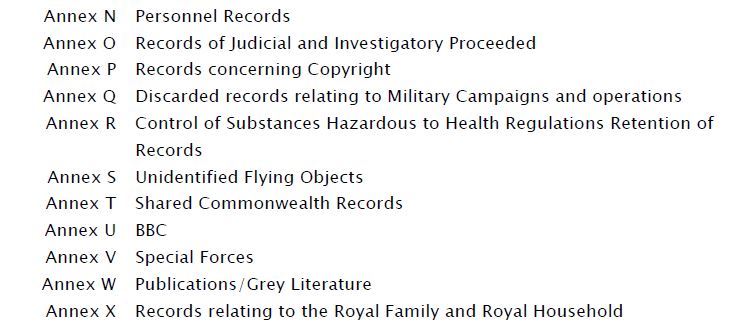
MoD’s ‘Guidance for Record Reviewers’, lists files on ‘unidentified flying objects‘ alongside those concerning nuclear testing, Special Forces and the Royal Family as being subject to special review procedures.

Extract from MoD document 'Guidance to Record Reviewers' (June 2011) - obtained via FOIA

Extract from MoD document ‘Guidance to Record Reviewers’ (June 2011) – obtained via FOIA

The document – obtained via a Freedom of Information request – was prepared by the Departmental Records Officer (DRO) in 2011, two years before MoD completed a ‘special project’ that transferred all surviving files to The National Archives at Kew.

After the closure of the UFO desk in 2009, anyone who contacts MoD to report a ‘sighting’ today is sent a standard letter. But no further records are kept on file. This allows the government to avoid handling further FOI requests on the subject.

But the addition of UFOs to the department’s retention schedule in 2011 came too late to save earlier records that were destroyed long before the MoD’s records retention system became accountable to the public.

Destruction was justified on the grounds that records of UFO incidents before 1962 were ‘of transitory interest’ for defence purposes and ‘in view of the mundane explanations which are found to apply to them…these papers [were] only retained for five years‘ (TNA ref AIR 2/18116).

This policy was put in place after Sir Robert Grigg chaired a committee to ‘review the arrangements for preservation of the records of government departments’.

This recommended that 90% of all departmental papers could be disposed of at first review (after five years).

Under the Public Record Acts of 1958 and 1967 only those records ‘perceived to have possible historical value’ were kept for transfer to TNA.  As most officials – including those working on the UFO desk – felt that UFO investigations were a fruitless diversion of scare resources, their fate was sealed.

The outcome was that during the ’50s and ’60s records were routinely weeded and destroyed at first review (after five years) and few survived to the 25 year mark where at second review transfer to the Public Record Office (now The National Archives) was possible.

But after a flurry of sightings in the autumn of 1967 followed by intense media interest, questions about the MoD’s records were raised by MP Eric Bullus, a former RAF pilot, on behalf of his constituent UFO researcher Julian Hennessy.

When Merlyn Rees MP, then Minister of Defence for the RAF, became aware that records, including intelligence files on UFOs from the 1950s had been lost, he ordered a freeze on further destruction.

But because of the volume of paperwork in MoD and poor communication this ministerial instruction failed to reach the relevant desk officers. Out of sight and scrutiny, officials in the RAF and DIS continued to mark UFO files for destruction at first review as recently as 1991.

The full consequences of these poor decisions were felt in 2005 when, following the arrival of Freedom of Information, MoD was inundated with requests for information on UFOs.  As they were now compelled to respond to requests by law, an efficient record management system was required to locate and prepare surviving records for transfer to public archives.

Many of the FOI requests received related to incidents before 1967, including sightings reported officially by aircrew. In almost every case officials had to respond that papers had been destroyed decades earlier because the subject was deemed of minimal historical interest.

Other losses included intriguing references to gun camera film of unidentified aerial phenomena obtained by RAF fighter pilots in the 1950s. These films were seen by a retired MoD official, Ralph Noyes, at MoD Main Building in 1970. But when Noyes made inquiries about them three decades later, he found they had disappeared – presumably destroyed.

In 2007 when the MoD announced the transfer of their surviving files to The National Archives they said this was to promote openness and counter what it called ‘the maze of rumour and frequently ill-informed speculation’ that surrounded their involvement in the UFO syndrome.

But  one of the persistent themes running through the papers was the embarrassment they felt about the destruction of swathes of earlier paperwork.

One official noted, in a 1967 document, ‘it is a great pity that this cat was let out of the bag sometime ago’ and added, without a hint of irony, that ‘incidentally, we are not destroying any more papers at present’.

By the time the ‘special project’ involving The National Archives was completed earlier this year the Ministry was left in no doubt about the level of public interest in UFOs – and its place in the social history of the nation.

As of July 2013 there had been 4.7 million individual page views of the TNA’s UFO page and 3.9 million downloads of documents – including one policy file that was downloaded 250,000 times.

Since that time public trust in government record-keeping has been rocked again by revelations that MoD has been holding thousands of files on Northern Ireland that should have been released under the 30 year rule (The Guardian 7 October 2013).

Meanwhile, the same paper revealed how The Foreign Office had been ‘unlawfully hoarding more than a million files of historic documents that should have been declassified and handed over to The National Archives’ (The Guardian 18 October 2013).

The consequences of the government’s record management policy – past and present – in terms of the effect on public trust in the ‘official version’ of history is the subject of a paper I am presenting at the annual conference of the International Council on Archives (ICA) in Brussels on 23 November.

The paper ‘Freedom of Information and archival appraisal: citizens influencing the choice of historical evidence‘, explains how I used Freedom of Information requests to fight and win the campaign to save the MoD’s surviving UFO records.

The late recognition of this subject as being of historical importance by MoD and The National Archives demonstrates that ordinary people can play a part in bringing about changes to official policy.

Posted in Uncategorized | Tagged , , , , , , , , , , , , , , , | Leave a comment

Angels makes FT Top 40

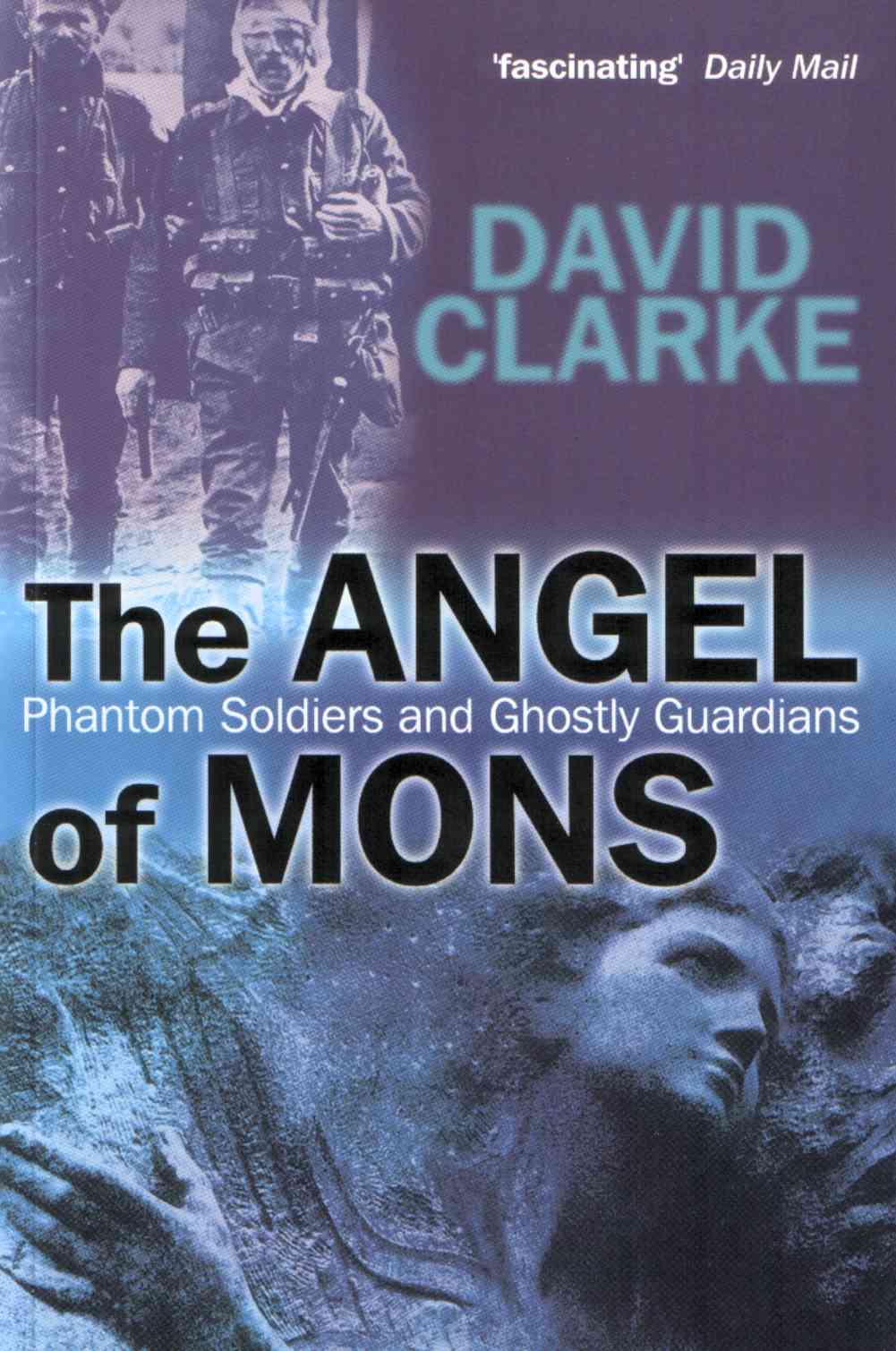
My investigation of the First World War legend, The Angels of Mons, is among the top ‘all time favourite stories’ chosen by a panel of contributors to Fortean Times magazine.

The Angels of Mons - next years marks the centenary of the battle that created the 'greatest legend' of WW1

The Angels of Mons – next years marks the centenary of the battle that created the ‘greatest legend’ of WW1

Angels of the Battlefield‘ – published in 2003 – came 4th in a list of 40 articles voted for by the panel to mark the 40th anniversary of the leading journal of strange phenomena. In  his endorsement, former BBC religious affairs correspondent Ted Harrison says:

‘The Angels of Mons investigation by David Clarke took a classic and much-loved national myth and subjected it to serious research and the right dose of Fortean scepticism’.

The article was written to mark the publication of my 2004 book, The Angel of Mons: phantom soldiers and ghostly guardians, published by Wiley, that examined what was undoubtedly the greatest legend of the conflict.

And as the centenary of the outbreak of the Great War approaches, the city of Mons in Belgium will adopt a high profile as the battleground upon which the conflict began and ended in 1918.

Mons will be European Capital of Culture in 2015 and next year it is hosting a series of commemorative events to mark the battle both in the city and at Saint Symphorien military cemetery, just over a mile to the east of the old town.

Among those buried in the Commonwealth cemeteries around Mons is Maurice Dease, the first soldier to win a Victoria Cross in the war. The 24-year-old died whilst commanding a machine gun section on Nimy bridge on the Mons-Conde canal during the battle on 23 August 1914. His final stand will be marked in the battle of Mons Remembrance Trail that is being developed to mark centenary next year.

Also in the cemetery at Mons there is a stone marking the grave of Private John Parr, who was the first British soldier to die in the First World War. Parr served with the 4th Middlesex Regiment and is thought to have been just 16 years old when he shot by a German patrol.

Parr is buried close to the grave of the last British soldier to die in the war, George Ellison from Leeds in Yorkshire. Ellison fought in the battle of Mons in 1914 and tragically was killed whilst on patrol just an hour and a half before the armistice was declared on 11 November 1918.

All three soldiers were part of the British Expeditionary Force (BEF) that arrived on the continent in 1914 to face the full weight of the German armies moving towards Paris. It was from the midst of the chaos that followed that stories emerged of phantom bowmen and ‘angels’ appearing on the battlefield to defend Allied soldiers against the axis forces.

A summary of the legend and Welsh writer Arthur Machen’s role in creating a urban myth that refused to die can be followed on my webpages here.

Posted in Uncategorized | Tagged , , , , , , , , , , , , , , , , , , , , , | Leave a comment

Haunted by the Past

Do ghosts exist? Author David Clarke talks to Steven McClarence of The Yorkshire Post about things that go bump in the night.

Three days before Christmas in 1855, a ghost story brought Charles Dickens to Sheffield. The 43-year-old author, brimming with what a local newspaper called “his genial manner and fine spirits”, stepped out on stage at the Mechanics’ Institution to find a full house waiting for him. After giving him “a hearty cheer”, they settled back to enjoy one of his celebrated readings of A Christmas Carol, his ghost-ridden morality tale.

“The audience was in every respect an excellent one,” the newspaper reported, “the front seats being occupied by many of the best families of the town and neighbourhood; and the other parts of the room crowded by persons of great respectability, including not a few of our most intelligent working men.”

At the end of the reading, the Mayor presented Dickens with – this being Sheffield – a range of cutlery, including a pair of fish carvers, everyone cheered again, and Dickens left on the overnight mail train to London en route to Paris.

Author Dr David Clarke – a man, as we shall see, with an intergalactic dimension – has unearthed this footnote of Yorkshire literary history while researching his latest book, which, aptly enough, is about ghost stories. Just nine months before Dickens came, Clarke has discovered, the city was gripped by a spectral event that gives the book its name: Scared to Death.

You can continue reading Steve McClarence’s feature, published in the Yorkshire Post Magazine on 19 October here.

Posted in Uncategorized | Tagged , , , , , | 4 Comments

Scared to Death – book launch

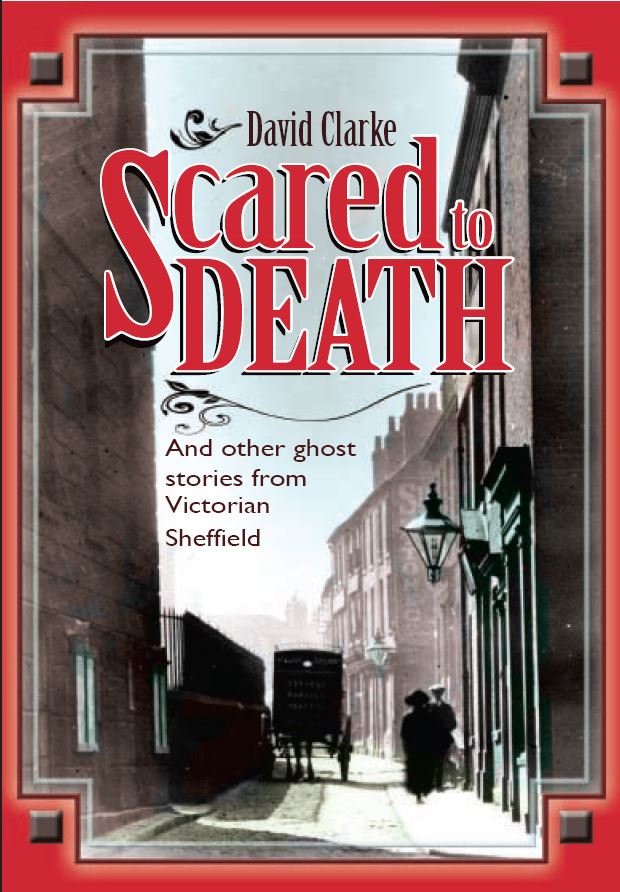
Who was Spring-heeled Jack, the agile bogeyman that terrorised Sheffield and escaped pursuers by making gigantic leaps? What were the eerie sounds in the sky known as the Gabriel Hounds? And why did people believe the ghost of a ‘white lady’ had caused the death of a woman?CoverJPG

True stories of these and other supernatural visitors that frightened and fascinated the people of Sheffield during the reign of Queen Victoria are revealed in my new illustrated book Scared to Death, published by ACMRetro in October.

Scared to Death draws upon original 19th century newspaper accounts of hauntings, originally published by the Sheffield Daily Telegraph and Sheffield & Rotherham Independent.  The stories are supplemented with images sourced from Sheffield City Libraries and Archives.

I began to collect material for this book decades ago working as a journalist for the Sheffield Star, but the arrival of the British Library’s online archive of 19th century newspapers allowed me to complete the project. Accounts of first hand experiences are woven together with items of folklore and superstition to produce a fascinating snapshot of the supernatural beliefs that circulated in Victorian society.

The book will be launched during the 22nd Off the Shelf Festival of Words, organised by Sheffield City Council and sponsored by city’s two universities and The Star newspaper. On Halloween night (Thursday 31 October) I will be reading stories from Scared to Death in the beautiful and ornate surroundings of the 18th century Upper Chapel, on Surrey Street in the heart of the city centre (tickets are available via the OTS website here).

The illustrated talk begins at 7.30 and includes contributions from story-teller Simon Heywood and author Ann Beedham, who designed and sourced images used in the book.

In his preface to Scared to Death, Alan Murdie – chair of The Ghost Club – writes: ‘...in this book the distinguished folklorist and historian David Clarke reveals the rich ghostly heritage of Sheffield. He has done exactly what every good researcher should do, going back to the earliest sources‘.

Professor Vanessa Toulmin, of the University of Sheffield’s Fairground Archive adds: ‘Dr David Clarke’s mastery of the newspaper archives is apparent in how the beautifully woven and evocative use of contemporary accounts brings the past to life with spine-chilling effect‘.

Advance tickets (£5/£4 concessions) are available from Sheffield Theatres Box Office on 0114 2789789 or Sheffield Arena Ticket Shop on 0114 2565567.

Posted in Uncategorized | Tagged , , , , , , , , , , , , , , , , , , , , , , , , , , | Leave a comment

U-2 secret history revealed

News that the CIA has finally ‘officially acknowledged‘ the existence of Area 51 as the base where the U2 spyplane was developed will come as no big surprise to aviation historians.

Some of the more far-gone UFOlogists prefer to believe the top secret Nevada testing ground is home to captured alien craft that are being back-engineered and flown by American top guns.

But the newly-declassified sections of the CIA’s history of the U-2 spyplane, originally released under the Freedom of Information Act in 1998 to the National Security Archive at George Washington University, tell a very different story.

The section of the history that deals with UFOs is very well known. It says that high-altitude testing of the U-2 from 1955 ‘led to an unexpected side effect – a tremendous increase in reports of unidentified flying objects’.

As most commercial (and military) aircraft operated below 40,000 ft during the ’50s, sightings of strange aircraft flying at altitudes above 60,000 ft began pouring into air traffic control. Being so high in the sky the U-2’s silver wings

‘would catch and reflect the rays of the sun and appear to the airliner pilot…below, to be fiery objects…at this time, no one believed manned flight was possible above 60,000 ft, so no one expected to see an object so high in the sky’.

The newly-declassified references reveal that James Cunningham, the CIA’s director of special projects, is the source for the claim that more than half of all sightings reported to Project Blue Book – the US Air Force’s UFO project – were caused by U-2 flights.

UFOlogists have cast doubt on this claim, but Cunningham may have have been referring to sightings reported by pilots and military personnel. One of these ‘sightings’  appears in the 9th tranche of MoD UFO files released in 2012. In the file, a senior RAF intelligence officer, Hugh Caillard, informs the Defence Intelligence Staff how

‘in 1958, whilst flying across the USA at 40,000 ft [he saw] a brightly illuminated object greatly in excess of my altitude…at the time the civilian jet airliner had not had its debut and I reported the phenomena to an air traffic control reporting centre who accepted my observation as if it were something routine!’ (DEFE 24/2080/1).

The newly un-redacted section covering the deployment of the U-2 to RAF Lakenheath in Suffolk also contains a surprise. CIA was keen to deploy the spy-planes in allied countries and the UK was a willing partner. The agency was also keen to use British crews to ‘fool the Soviets’ if a spy-plane was captured or shot down.

When four U-2s arrived in secrecy at Lakenheath on 29 April 1956 the USAF released a cover story that the Lockheed-developed aircraft would be flown by the USAF Air Weather Service to study the jet-stream and cosmic rays.

But before flights could begin the agreement with Prime Minister Anthony Eden began to falter as the Suez crisis loomed on the horizon. The agency told the British only one plane would be deployed, but in fact four were sent to the American base at Lakenheath. The CIA reveals that two specific incidents led them to transfer the U-2s to Wiesbaden in West Germany later in June.

The first was the notorious ‘frogman’ incident when MI6 sent a retired naval commander, Lionel ‘Buster’ Crabb, on a hazardous mission to examine the hulls of ships from a Soviet fleet that were visiting Portsmouth. Crabb’s headless body was later found washed up on beach, causing huge embarrassment for Eden’s government who were entertaining Soviet leader Nikita Krushchev.

Adding to the diplomatic faux-pas stacking up in Whitehall, just two days later (in May 1956), ‘a U-2 on a training flight from Lakenheath had inadvertently penetrated the British radar network, causing RAF fighters to scramble’.  Last year I interviewed a national serviceman who was present at RAF Neatishead when this incident occurred. He said the U-2 was classified as a UFO and orders were given to shoot it down. These were only rescinded at the last minute.

You can imagine what might have happened next if the RAF had shot down a U-2 spy-plane over East Anglia. This, or a similar incident involving a secret reconnaissance aircraft, may explain USAF Sabre pilot Lt Milton Torres’ account of the occasion – again in 1956/57 – when he was ordered to open fire on a UFO over East Anglia.

Official confirmation of this tense stand-off between East and West adds further context to the reasons for official secrecy that shrouded the Lakenheath-Bentwaters UFO incident that occurred in August that year (see my account here).

This mixture of secrecy, miscalculation and incompetence led the world to the very brink of a Third World War in 1956. We have had to wait almost 60 years to discover how close we came.

Quite simply, according to the British defence journalist Chris Pocock, ‘the U-2 was absolutely top secret’ at the time and ‘they had to hide everything about it.’

A full copy of the CIA’s secret history of the U-2 can be downloaded from the National Security Archive here.

Posted in Uncategorized | Tagged , , , , , , , , , , , , , , , , , , , , , , , , | Leave a comment

Eric Joyce MP: The MoD and those pesky UFOs

The MP for Falkirk, Eric Joyce, has claimed some UFOs logged by the Ministry of Defence were actually secret flights by experimental aircraft.

Joyce was a major in the British Army and served as Parliamentary Private Secretary to Defence Minister Bob Ainsworth in the last months of Gordon Brown’s time as Prime Minister. He resigned in September 2009, just before Ainsworth approved the closure of the MoD’s UFO desk.

On a section of his blog marked ‘The MoD and those pesky UFOs‘ Joyce refers to the recent press stories and adds:

“Most of the copy is the funny stuff, folk being abducted and so forth. Then there’s some thoughts behind the occasional surge in reports from the public – the increased use of chinese lanterns and the movie Close Enounters, for example…

“The reports might have mentioned that there would have been another reason for the occasional upsurge in reports – that is, that they were real….When Stealth bombers were being developed, they routinely flew over the airspace of friendly nations – certainly including the UK and Scotland.

“Indeed, over the years, experimental aircraft of all sorts, usually secret, would have been seen by the public and MoD assets (including US airbases in the UK)  on the ground would have tracked them.  Given that many such flights were secret, the MoD would presumably at the time have given the usual wacky reasons re: UFO sightings.

“The MoD would also have wanted to check genuine sightings to ensure they were what they thought they were – i.e. the US or ourselves, and not either the US doing something cheeky we hadn’t been told about or, even more ‘of interest’, some other nation like the (then) Soviets being even more cheeky.

“That stuff will still be going on, although with the end of the Cold War the spend on ‘invisiblity’ re: aircraft is probably well down, along with sightings of experimental aircraft.  Unless you live in Arizona, or some such.”

He adds: “Not all UFOs were full of little green men and women.” Well, he was in the right place to know.  Thanks to the Magonia blog for the lead.

Posted in Uncategorized | Tagged , , , , , , , , , | Leave a comment

Finding Needles in the MoD Haystack – guest blog

I am pleased to welcome veteran British UFOlogist Jenny Randles for this guest blog reflecting on the release of the Ministry of Defence UFO files:

After the furore over the release of the final MoD files the UFO debate may now return to its normal antipathy.  But I hope not, because we should be treating these hard won archives as an opportunity and not a cover-up.

‘Proof’ of aliens is not ‘out there’, because it is not in any UFO records anywhere.  If ET was indeed flying across our skies then that premise would be established by reference to many reports from outside the MoD. It is unwise to imagine that these records are ‘tainted’ because they at best offer occasional hints of alien contact amidst other possible interpretations.  Whether aliens exist, or have ever caused an unresolved UFO case, is not established scientifically because there is no hard evidence, such as non-terrestrial DNA, or examples of alien tech left behind.

We have visited the Moon and Mars and left proof that beings from another world have gone there. That such certainty is not reciprocated in any set of UFO data is telling that we may be jumping the gun by assuming that UFO sightings must be alien visitations. It is as an option, of course, but only that. We must be led by the evidence that we do have and not the evidence we might suppose someone has gathered but chosen to hide.

In reality these many pages of case files collated by the MoD are a treasure trove made available for everyone to study as they choose. There are endless ways in which we could devise research projects to utilise this information. We can look at the statistics, learning who sees what, where and when. Cross reference with other extant data sources is fruitful and reveals that there is nothing ‘odd’ about the MoD files. It reflects what you find elsewhere – something that would be unlikely if ‘selectivity’ of release of the best cases was occurring.

However, there is also much more that we can do if we treat these files as an asset rather than something to distrust and disregard. We should be using them to discern what they tell us about the nature of the UFO mystery – for there are many hidden clues hiding in these records. Tracing witnesses and digging deeper will not be easy but is worth the effort.

The value of such a task is evident from cases in the MoD records that were also reported to other sources (such as UK UFO investigators).  Some these have already been pursued with more vigour than the MoD possessed, once satisfied that they were not a defence threat.

Indeed, files were released as early as 1983. Those included a few sightings from South Wales reported from sources such as air traffic control at West Drayton. These were much like thousands of similar reports in the recent archive releases. The difference was that they were sent out to UFO researchers such as myself mere days after they occurred so it was possible to investigate quickly.

As a result we were able to trace and interview witnesses. One proved very interesting as its full extent unravelled. A large, seemingly structured, object was seen to cross the sky near Cardiff. The MoD had received a modest report form with limited information from a single person who described some lights. Our research revealed there were actually multiple witnesses at independent locations who did not contact the MoD. The full case thus provided good quality witnesses such as a GP on a night call and an off duty RAF aircraft engineer – but only if you looked deeper than the file.

Many other examples are in these files. There are fine accounts of unusual atmospheric phenomena, or weather events such as ball lightning, displaying characteristics matching other UFO cases. Researching, documenting and comparing with our own UFO data bases can lead to useful insights that may benefit science. It is natural that any witness to some rare scientific phenomenon would today be likely to interpret it as ‘one of those UFOs’ and report it as such. So amidst the numerous fire lanterns, airships and misperceptions of bright stars and planets within these MoD archives there are hidden gems waiting to be discovered.

Of course, atmospheric phenomena can interact with other things in the sky – such as aircraft carrying hundreds of human lives. Talk of UAP and extreme forms of ball lightning may not sound exciting if you are hoping to find aliens behind UFO reports. But UAP are real and potentially dangerous things that we need to understand for reasons of air safety, let alone scientific curiosity.

In these MoD archives there are cases of this type, including one from April 1984 where – again – only limited information is on the archive as it was conveyed second hand from a military base control. As such it was filed and forgotten by the MoD. But not by the UFO community, because the actual witnesses (several air traffic controllers at a civil airport in eastern England) contacted the British UFO Research Association and allowed a discrete investigation to occur. This case involved a ball of light in broad daylight steeply descending onto the main runway as a small passenger plane approached. The ball then ‘bounced’ off the runway and sped into the sky.

There is highly useful UFO data in the MoD archives based on what we know about already and have already chanced to investigate. What lies within the tens of thousands of other cases that were never investigated  by the MoD’s ‘UFO desk’ is a story still waiting to be told.

We owe it to those witnesses who contacted the MoD in good faith to accept this collection of their invaluable data and forget complaints and conspiracies and offer full investigation.

[Dave Clarke writes: You can begin your research by downloading all 209 MoD UFO files, dating from 1984-2009, from The National Archives UFO website here. A similar number of files, dating from 1912 to 1984, are available for research at the archives in Kew, southwest London. A summary of the highlights from all the surviving files and a history of the MoD’s UFO desk, can be found in my book The UFO Files (2nd edition) published by Bloomsbury in 2012]

Posted in Uncategorized | Tagged , , , , , , , , , , , | Leave a comment